Hey everyone, it’s Jake here from your go-to packing machine supplier, and today we’re diving into something that actually makes or breaks your packaging line—packaging accuracy, specifically when it comes to dimensions. If you’re a brand owner, plant manager, or anyone who’s ever pulled a batch of packages only to realize they’re either too small to fit the product or sticking out like a sore thumb, this post is for you. Let’s cut through the jargon, keep it real, and break down what “packaging accuracy in dimensions” really means for your operation. Packing Machine

First off, let’s get one thing straight: when people talk about a packing machine’s accuracy, they’re not just talking about how precise it is in a lab. They’re talking about how it performs day in and day out on your factory floor, dealing with different materials, speed changes, and even that one operator who swears they can “adjust it real quick” and throw off the whole setup. I’ve been in this game for 12 years now, and I can tell you—most of the confusion around dimension accuracy comes from mixing up tolerance specs, setup variables, and real-world performance. Let’s start with the basics.
What exactly is dimension accuracy for a packing machine? Simply put, it’s the ability of the machine to consistently form, cut, seal, or fill packaging materials to the exact length, width, height, and thickness you specify. But here’s the catch: no machine is 100% perfect. Even the most expensive, high-speed line will have tiny variations. The key is understanding what’s normal, what’s a problem, and how your machine’s accuracy stacks up against your needs. For example, if you’re packing small electronic components that need to fit perfectly into blister packs, you’re going to need way tighter accuracy than if you’re packing bulk grains into large woven bags. That makes sense, right?
Let’s break down the factors that actually impact dimension accuracy, because it’s not just about the machine’s brand or price tag. First, there’s the machine’s core hardware. At our facility, we use servo motors for all our cut and form operations, not regular stepper motors. Why? Servos can adjust position in milliseconds, so if there’s a tiny slip in the film or a slight change in material tension, it fixes it immediately. Steppers are cheaper, but they’re open-loop—they don’t know if they slipped, so your dimensions will drift over time. Then there’s the cutting system. A lot of cheap machines use dull, worn blades that tear film instead of cutting clean, leading to uneven edges and length variations. We use precision-ground steel blades that are indexed automatically, so they stay sharp and aligned for months, even with 24/7 runs.
But wait—hardware is only half the battle. The other half is setup and material handling. I’ve seen customers get a machine installed, run it with a weird mix of film types (like using a thin poly film meant for low speeds on a high-speed line) and wonder why their dimensions are all over the place. Material tension is huge here. If your packaging film is too loose going through the machine, it will stretch, and when you cut it, it will shrink back a little—boom, your length is off. If it’s too tight, you get wrinkles, uneven seals, and again, length variations. A lot of entry-level machines don’t have automatic tension control, so operators have to adjust it by hand, which leads to human error. All our machines come with web tension sensors that adjust automatically, so you don’t have to worry about that anymore. That’s been a game-changer for our customers who run multiple product lines with different film types.
Now, let’s talk about tolerance levels, because this is where a lot of people get mislead. Tolerance is the amount of variation you can have in dimensions and still have a good package. For example, if you’re making a 10-inch bag, a tolerance of +/- 0.1 inches means any bag between 9.9 and 10.1 inches is acceptable. For many industries, that’s totally fine. But for medical device packaging or small retail blister packs, you might need a tolerance of +/- 0.05 inches or even less. So when a machine supplier says “our accuracy is +/- 0.08 inches,” you can’t just say “that’s good” or “that’s bad”—you have to match it to your product’s needs.
I want to be clear here: there’s no such thing as “one-size-fits-all” accuracy. We had a customer last year who was packing 50-pound dog food bags. They came to us saying their old machine had an accuracy of +/- 0.5 inches, which sounded like a lot, but when we looked at their process, that was actually perfect for them. Their bags were large, made of thick woven poly, and they just needed to make sure they weren’t underfilling or overfilling enough to cause issues. They didn’t need tighter accuracy, so paying extra for a machine with +/- 0.1 inch accuracy would have been a waste of money. On the flip side, we had a client in the electronics industry packing tiny USB chargers into clamshell packs. Their old machine had a tolerance of +/- 0.2 inches, which was causing the clamshells to be too big (leading to extra material waste) or too small (breaking the product during insertion). We swapped them to a machine with +/- 0.06 inch accuracy, and their waste went down by 12% and product breakage dropped to almost zero. That’s the difference between matching accuracy to your actual needs, not just chasing the tightest number.
Another big factor in dimension accuracy is speed. A lot of people think, “the faster the machine, the less accurate it is”—and that’s true, but only up to a point. If your machine is properly calibrated and has good servo control, high speed doesn’t have to kill accuracy. We have a high-speed vertical form-fill-seal (VFFS) machine that runs at 120 bags per minute. Its dimension accuracy is still +/- 0.07 inches, which is way better than some slow, 30-bags-per-minute machines we’ve seen that have +/- 0.15 inch accuracy. The problem with high speed and accuracy comes down to acceleration and deceleration. If the cut blade is moving too fast and can’t stop precisely when it needs to, you get overcuts or undercuts. Our machines have dynamic braking systems that adjust the blade’s speed based on the line’s current speed, so even at max output, it stays on track. We had a customer who was running 80 bags per minute on their old machine, and their length variation was +/- 0.18 inches. We upgraded them to our VFFS model, and at the same 80 BPM, their variation dropped to +/- 0.08 inches. They were able to keep their production volume the same, but cut their film waste by 10%—that’s instant savings.
Now, let’s talk about common mistakes people make when evaluating packing machine accuracy. First, relying on manufacturer specs alone. A lot of suppliers will give you a “lab accuracy” number that’s tested under perfect conditions—new film, no speed changes, operator standing right there. But in real life, you have roll changes, different film batches, speed adjustments, and operators who don’t have 10 years of experience. So when we test our machines for customers, we do a real-world test: run three full rolls of film, simulate roll changes, adjust speed a few times, and measure 100 consecutive packages to get the actual accuracy. That’s the number you care about, not the lab number.
Second, ignoring the entire line, not just the packing machine. The packing machine isn’t working in a vacuum. If you have a faulty conveyor feeding products into the machine, or a checkweigher that’s not calibrated, that will throw off your dimensions too. I had a customer last year who thought their packing machine was bad because their package heights were off. Turns out, their product conveyor was tilted, so the products were sitting at an angle going into the machine, making the seal height uneven. We fixed the conveyor, and the packing machine’s accuracy went right back to spec. That’s why when we work with customers, we do a full line audit, not just sell them a machine and walk away. We make sure everything upstream and downstream is aligned so their accuracy stays consistent.
Third, not planning for future needs. If you’re a small brand right now packing 10,000 units a month, but you’re planning to scale to 100,000 in two years, don’t buy an entry-level machine with +/- 0.2 inch accuracy. It will cost you more in the long run when you have to upgrade. All our mid-range machines are scalable—you can add better sensors, upgrade the cutting system, or tune the software to get tighter accuracy as your production grows. That’s something we always emphasize: buy for where you’re going, not just where you are today.
Let’s also talk about maintenance, because even the most accurate machine will drift if you don’t take care of it. A lot of customers think “set it and forget it,” but packing machines need regular checks to keep their dimension accuracy. For example, cutting blades need to be sharpened every 500-1000 hours, or they’ll start tearing film. Tension sensors need to be calibrated monthly, because dust and film residue can throw them off. We give all our customers a free maintenance checklist when they buy a machine, and our service team does quarterly check-ins to make sure everything is on track. I had a customer who skipped maintenance for 6 months, and their length variation went from +/- 0.07 inches to +/- 0.25 inches. It cost them an extra $2,000 a month in wasted film just because they didn’t sharpen a blade. That’s a mistake you don’t want to make.
Wait, let’s get into a specific example to make this tangible. Let’s say you’re making stand-up pouches for a protein bar. The specs for the pouch are 8 inches tall, 4 inches wide, +/- 0.1 inches tolerance. Your old machine has an average length variation of 0.12 inches—so 12% of your pouches are either too short or too tall, which means you have to sort them manually, wasting time and product. A good packing machine will have a standard deviation (that’s a statistical measure of variation, by the way) of less than 0.05 inches. So 99.7% of your pouches will be within +/- 0.15 inches, which is well within your tolerance. That’s the accuracy you should be shooting for.
I know this all sounds technical, but it boils down to one thing: dimension accuracy isn’t just a spec number—it’s money in your pocket. Tighter accuracy means less wasted packaging material, less product damage, fewer rejects, and less time spent fixing problems. Over a year, that adds up way more than the initial cost of a better machine. We’ve had customers who recouped the extra cost of their machine in 6 months just from reduced film waste. That’s not a sales pitch—that’s actual numbers from our client base.
Now, I want to be transparent—no machine is perfect, and there will always be some variation. The goal is to minimize that variation to a level that’s manageable for your operation. If you’re not sure what accuracy you need, or if your current machine isn’t delivering the results you want, reach out. We can do a free line audit, test your product and film on our machines, and give you real, actionable advice—no pushy sales tactics, just honest feedback based on what we’ve seen work for hundreds of customers.
Look, at the end of the day, packing is about more than just putting a product in a bag. It’s about making sure your product gets to the customer in perfect shape, your operation runs smoothly, and you’re not throwing money away on wasted materials. Dimension accuracy is the foundation of all that. If you’re tired of dealing with inconsistent package sizes, waste, and downtime, let’s talk. We can help you find the right machine with the right accuracy for your specific needs, no guesswork, no overpaying for specs you don’t need.
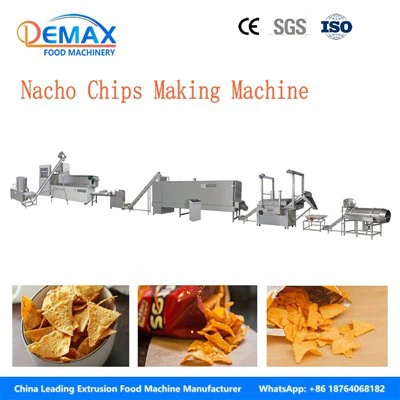
Doritos Chips Production Line References:
- American Society of Mechanical Engineers. (2020). Tolerance Design for Packaging Machinery. ASME B21.5-2020
- Packaging Machinery Manufacturers Institute. (2022). Performance Standards for Vertical Form-Fill-Seal Equipment. PMMI Best Practices Series
- Taufik, M., & Kalil, A. (2021). Dimension Accuracy in Automated Packaging Systems: Factors and Mitigation Strategies. Journal of Manufacturing Processes, Vol. 66, pp. 412-423
- National Institute of Standards and Technology. (2019). Statistical Methods for Evaluating Precision of Industrial Machinery. NIST Handbook 133
Jinan Demax Machinery Co., Ltd.
With abundant experience, we are one of the most professional packing machine manufacturers and suppliers in China. Please rest assured to buy durable packing machine made in China here from our factory. For price consultation, contact us.
Address: Room 502, Building 3, Xiangtai Plaza, No. 129 Yingxiongshan Road, Shizhong District, Jinan City, Shandong Province
E-mail: info@seo.com.cn
WebSite: https://www.demaxfoodmachine.com/
