Achieving impedance matching with an integrated transformer is a crucial aspect in modern electronic systems, especially in high – frequency applications. As a supplier of integrated transformers, I’ve witnessed firsthand the challenges and solutions associated with this process. In this blog, I’ll share some in – depth knowledge about how to achieve impedance matching using our integrated transformers. Integrated Transformer
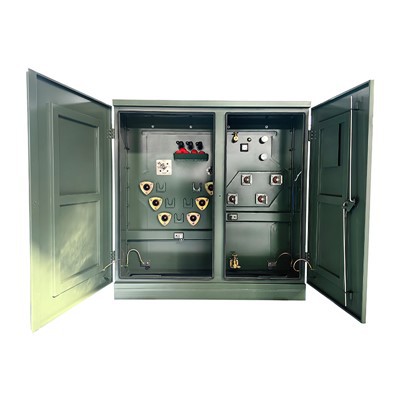
Understanding Impedance Matching
Before delving into the methods of achieving impedance matching with an integrated transformer, it’s essential to understand what impedance matching is. Impedance is a measure of the opposition that a circuit presents to the flow of alternating current. In an electrical circuit, impedance matching is the process of making the impedance of a load equal to the impedance of the source. When the source and load impedances are matched, maximum power transfer occurs, and signal reflections are minimized.
For example, in a radio frequency (RF) system, improper impedance matching can lead to significant signal loss, reduced efficiency, and interference. This is where integrated transformers come into play. An integrated transformer can be used to transform the impedance of a load to match the impedance of the source, thereby improving the performance of the system.
Characteristics of Our Integrated Transformers
Our integrated transformers are designed with several key features that make them ideal for impedance – matching applications. Firstly, they offer high – quality magnetic cores, which provide low magnetic loss and high magnetic permeability. This allows for efficient energy transfer and reduces the amount of power dissipated as heat.
Secondly, our transformers are fabricated using advanced semiconductor manufacturing processes. This results in a high level of integration and miniaturization, making them suitable for use in compact electronic devices. The precise manufacturing process also ensures consistent electrical characteristics, which is crucial for accurate impedance matching.
Another important characteristic is the wide range of turns ratios available. The turns ratio of a transformer is directly related to the impedance transformation ratio. By choosing the appropriate turns ratio, we can achieve the desired impedance matching between the source and the load.
Methods of Achieving Impedance Matching with Our Integrated Transformers
Calculating the Turns Ratio
The turns ratio (N) of a transformer is defined as the ratio of the number of turns in the secondary winding (N2) to the number of turns in the primary winding (N1), i.e., N = N2/N1. The impedance transformation ratio (Z2/Z1) of a transformer is equal to the square of the turns ratio, i.e., Z2/Z1 = N².
To achieve impedance matching, we first need to know the impedance of the source (Zs) and the impedance of the load (Zl). We can then calculate the required turns ratio using the formula N = √(Zl/Zs). For example, if the source impedance is 50 ohms and the load impedance is 200 ohms, the required turns ratio is N = √(200/50)= 2.
Once we have calculated the turns ratio, we can select an integrated transformer from our product line with the appropriate turns ratio. Our transformers are available in a variety of turns ratios, allowing for flexibility in impedance – matching applications.
Using a Transformer in a Circuit
When using an integrated transformer for impedance matching, it’s important to connect it correctly in the circuit. The primary winding of the transformer should be connected to the source, and the secondary winding should be connected to the load.
In some cases, additional components such as capacitors and inductors may be required to fine – tune the impedance matching. For example, a capacitor can be used in parallel with the load to adjust the capacitive reactance, while an inductor can be used in series with the load to adjust the inductive reactance.
It’s also important to consider the frequency of the signal. Our integrated transformers are designed to operate over a specific frequency range. If the operating frequency is outside this range, the performance of the transformer may be affected, and the impedance matching may not be optimal.
Testing and Optimization
After connecting the integrated transformer in the circuit, it’s necessary to test the impedance matching. This can be done using a network analyzer, which can measure the reflection coefficient (S11) of the circuit. A low reflection coefficient indicates good impedance matching.
If the impedance matching is not satisfactory, we can make adjustments to the circuit. This may involve changing the turns ratio of the transformer, adding or removing additional components, or adjusting the values of the existing components.
Case Studies
Let’s look at a couple of case studies to illustrate how our integrated transformers can be used to achieve impedance matching.
Case Study 1: RF Amplifier
In an RF amplifier, the input impedance of the amplifier may not match the output impedance of the source. By using one of our integrated transformers, we can transform the impedance of the source to match the input impedance of the amplifier.
The source impedance was 50 ohms, and the input impedance of the amplifier was 100 ohms. We selected an integrated transformer with a turns ratio of √(100/50)≈1.41. After connecting the transformer in the circuit, the reflection coefficient was measured using a network analyzer. The results showed a significant improvement in impedance matching, with a low reflection coefficient indicating efficient power transfer.
Case Study 2: Wireless Communication System
In a wireless communication system, the antenna impedance may not match the impedance of the transceiver. Our integrated transformers can be used to bridge this impedance gap.
The antenna impedance was 75 ohms, and the transceiver impedance was 50 ohms. We chose an integrated transformer with a turns ratio of √(75/50)≈1.22. After integrating the transformer into the system, the overall performance of the wireless communication system was improved, with reduced signal loss and better signal quality.
Advantages of Using Our Integrated Transformers for Impedance Matching
There are several advantages to using our integrated transformers for impedance matching. Firstly, our transformers offer high – performance impedance transformation, ensuring efficient power transfer and reduced signal reflections.
Secondly, the compact size of our integrated transformers makes them suitable for use in space – constrained applications. This is particularly important in modern electronic devices, where miniaturization is a key requirement.
Thirdly, our transformers are reliable and have a long service life. They are manufactured using high – quality materials and advanced processes, which ensures consistent performance over time.
Conclusion
Achieving impedance matching with an integrated transformer is a complex but essential process in electronic systems. Our integrated transformers, with their high – quality magnetic cores, advanced manufacturing processes, and wide range of turns ratios, provide an effective solution for impedance – matching applications.

Whether you are working on an RF amplifier, a wireless communication system, or any other electronic device that requires impedance matching, our integrated transformers can help you achieve optimal performance.
Pole Mounted Transformer If you are interested in learning more about our integrated transformers or would like to discuss your specific impedance – matching requirements, please feel free to contact us. We are more than happy to assist you in finding the right solution for your application.
References
- "RF Circuit Design" by Chris Bowick.
- "Microwave Engineering" by David M. Pozar.
- "Transformer Design Handbook" by Colonel W. T. McLyman.
Nantong Yawei New Energy Technology Co., Ltd.
As one of the most professional integrated transformer manufacturers and suppliers in China, we’re featured by quality products and good service. Please rest assured to wholesale durable integrated transformer made in China here from our factory. Customized orders are welcome.
Address: Room 28-101, Building 27 and 28, No.333 Kaiyuan Avenue, Sunzhuang Subdistrict, Hai’an City, Nantong City, Jiangsu Province, China
E-mail: admin@nantongyawei.com
WebSite: https://www.nantongyawei.com/
