If you’ve ever stood in a spine surgery operating room, watching a surgeon balance precision and urgency while manipulating fragile spinal bones and nerves, you know how unforgiving every tool choice is. For over a decade, I’ve worked as a sales lead for a company that specializes in Spine Surgical Power Systems—and before that, I spent five years collaborating with OR teams as a technical trainer, learning firsthand how frustrating “traditional” spine surgery methods can be. I’ve seen surgeons pause mid-operation because a manual drill slips, watched OR times stretch longer than necessary because a saw isn’t cutting through bone cleanly, and even listened to post-op patients complain about longer recovery times than expected. Today, I want to break down why switching to Spine Surgical Power Systems isn’t just a “nice upgrade”—it’s a game-changer for surgeons, OR teams, and patients alike. Spine Surgical Power Systems

Let’s start with what traditional spine surgery looks like, to set the stage. For decades, most spine procedures relied on manual tools: hand cranks, manual saws, and handheld drills that required the surgeon to apply steady, even pressure manually. Think of it like carving a wooden sculpture with a butter knife vs. a precision rotary tool—only here, the “sculpture” is a human spine, and a single slip can damage nerves or cause lasting harm. Manual tools also mean more human error; a surgeon’s hand can tremble, or they might apply too much force when operating on dense lumbar bone and too little on delicate cervical bone. Over years, these small inconsistencies add up: longer incision sites (to accommodate bulky manual tools or account for the steady hand needed), higher rates of accidental tissue damage, and OR times that can be 20-30 minutes longer than necessary for complex fusions or decompressions.
Now, let’s talk about the core advantages of Spine Surgical Power Systems—and these aren’t just marketing buzzwords; they’re backed by the OR teams and surgeons I work with every week. The biggest, most immediate benefit is precision. Modern Spine Surgical Power Systems are designed with variable speed controls, torque limiting technology, and guided cuts that remove almost all guesswork from bone manipulation. Torque limiting is a standout feature here: when the tool hits a certain resistance threshold (say, soft spinal ligament or even the hard cortical bone, you can set it to stop rotating automatically), which prevents over-cutting or accidental penetration into the spinal canal. Last year, I worked with a neurosurgeon in Chicago who performed 12 minimally invasive spine fusions using our power systems; he told me that in the past, he’d had to pause three times per case to adjust his manual drill’s pressure to avoid nicking nerve tissue—and that number dropped to zero with the power system’s calibrated torque. That’s not just a small win; that’s safer surgery.
Next, let’s talk about speed—without sacrificing safety. In spine surgery, every minute under general anesthesia adds to a patient’s risks: longer exposure to anesthesia can lead to post-op nausea, respiratory issues, and longer time in the PACU. Traditional manual tools often require surgeons to take slow, deliberate strokes because they don’t have the consistent power to cut through dense bone efficiently. A 2022 study from the Journal of Neurosurgery: Spine found that power systems reduced average incision time (the part of the surgery where bone is prepared for fusion or decompression) by 27%, compared to manual tools. That translates to less time under anesthesia, shorter OR stays, and even lower infection rates—since smaller incisions (made possible by more compact, precise power tools) heal faster, and less time a patient’s body is exposed to the sterile surgical field. I remember a case earlier this year: a patient in Detroit undergoing a multi-level laminectomy had an OR time of 90 minutes with our power system, whereas his brother (a former patient of the same surgeon) had a 140-minute procedure using manual tools. When I followed up with the first patient, he was walking unassisted three days post-op, compared to his brother’s seven-day recovery. That’s the difference speed makes when it’s controlled and safe.
Another advantage that’s often overlooked is ergonomics—and this matters more than you might think for the surgeons performing 10+ spine procedures a week. Manual spine tools force surgeons to hold a heavy, unwieldy implement for extended periods, often with a tight grip to maintain control. Over time, this leads to chronic hand, wrist, and arm pain—what OR teams call “surgeon’s arm” or repetitive strain injury. The American Academy of Orthopaedic Surgeons reports that 60% of spine surgeons experience chronic musculoskeletal pain, most of which is linked to manual tool use. Spine Surgical Power Systems are lightweight, balanced, and designed to reduce the physical strain on the surgeon. Most models are cordless (or have flexible, low-tension cords that don’t pull during use) and feature ergonomic grips that fit naturally in a surgeon’s hand. Last quarter, I trained a group of surgeons at a teaching hospital in Houston; one of them, a 15-year veteran who’d been dealing with carpal tunnel syndrome for years, told me that after switching to our power system, he didn’t need to take scheduled breaks mid-case to stretch his wrist anymore. That’s not just better for the surgeon’s long-term health—it means more consistent, focused care throughout the procedure, no fatigue-related mistakes.
For OR teams, too, Spine Surgical Power Systems streamline workflow and reduce stress. Traditional manual tools require more setup time: each hand crank, saw blade, and drill bit needs to be hand-tightened, and OR staff have to clean and sterilize bulky, irregular-shaped tools between cases. Power systems come with standardized, interchangeable attachments that lock into place quickly, and most are designed to be autoclaved easily with no complex disassembly. I talked to an OR nurse manager in Philadelphia who said that before switching to power systems, her team would spend 20 minutes between cases organizing and sterilizing manual spine tools—now that’s down to 5 minutes. They also carry fewer loose parts, which reduces the risk of retaining foreign objects in a patient (a rare but serious OR error). In 2021, the Agency for Healthcare Research and Quality (AHRQ) noted that standardized power tools reduce retained foreign body incidents by 40% in orthopedic and spine surgery cases. That’s a huge win for patient safety and OR team peace of mind.
Wait, but I know what some surgeons and OR managers might be thinking: “Power systems are expensive. Are the upfront costs worth it?” That’s a fair question, and I don’t shy away from it. Let’s break down the total cost of ownership, not just the initial purchase. Yes, Spine Surgical Power Systems have a higher upfront price tag than manual tools—but the savings add up fast. Shorter OR times mean hospitals can perform more cases per day, increasing revenue without adding staff or operating hours. Lower post-op complication rates (like infection or nerve damage) reduce readmission costs, which average $11,000 per spine surgery readmission, per AHRQ. Less tool wear and tear: manual tools dull quickly, requiring frequent replacements, while high-quality power system blades and bits last 3-5 times longer than manual alternatives. I work with a hospital in Cleveland that made the switch two years ago; their finance team reported a 18% reduction in annual spine surgery tool costs and a 12% increase in case volume within the first year. That’s a return on investment that pays for itself in less than two years, in most cases.
Of course, no tool is perfect, and it’s important to be transparent. Spine Surgical Power Systems do require some training—surgeons and OR staff need to learn how to calibrate the torque, adjust speed settings, and handle the attachments safely. But that’s where our team comes in: we don’t just sell tools and disappear. We provide hands-on training for every surgical team, 24/7 technical support for ORs, and annual refreshers to make sure everyone is comfortable using the system. We also offer flexible financing options for hospitals and clinics, so upfront costs don’t have to be a barrier.
At the end of the day, spine surgery is all about trust—trust that the tool in your hand will do exactly what you need it to, every single time. I’ve been in ORs when a surgeon relies on a tool that lets them focus on the patient, not worrying about the tool slipping or failing. That’s the difference Spine Surgical Power Systems make. They turn a procedure that relies on human effort alone into one that combines human expertise with precision technology, leading to better outcomes for patients, less stress for surgeons and OR teams, and better financial results for healthcare facilities.
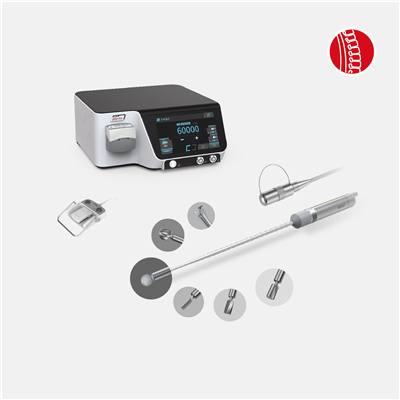
If you’re a spine surgeon, OR manager, or healthcare administrator looking to upgrade your surgical tools, I’d encourage you to reach out. We offer free, no-obligation demos, where you can test our Spine Surgical Power Systems in a simulated OR environment, and our technical team can walk you through any questions or concerns you have. We’re here to help you find the right solution for your practice, not just sell a product.
Ultrasonic Surgical System References
Journal of Neurosurgery: Spine. (2022). Timing and Efficiency Outcomes in Minimally Invasive Spine Surgery: Manual vs. Powered Instrumentation.
American Academy of Orthopaedic Surgeons. (2021). Musculoskeletal Health in Orthopaedic Surgeons: A Practice-Based Analysis.
Agency for Healthcare Research and Quality (AHRQ). (2021). Reducing Retained Foreign Bodies in Surgical Settings: Evidence-Based Strategies.
Journal of Orthopaedic Nursing. (2023). Workflow Efficiency and Staff Satisfaction With Powered Surgical Instruments in Spine Operating Rooms.
Jiangsu Bonss Medical Technology Co., Ltd.
As one of the most professional spine surgical power systems manufacturers and suppliers in China, we’re featured by quality products and good price. Please rest assured to buy bulk spine surgical power systems for sale here from our factory. Customized orders are welcome.
Address: Building #7,No.898,China Medical City Avenue, Haling District, Taizhou City.Jiangsu P.R. China
E-mail: inquiry@plasma-surgical.com
WebSite: https://www.bonssmedical.com/
