If you’ve ever stood in front of a charred building, watching crews douse the last embers of a fire that spread faster than anyone could’ve predicted, you understand how small, seemingly inconsequential decisions can make the difference between a safe structure and a total loss. For 12 years, I’ve supplied our Fireproof Board Series to contractors, architects, and property managers across North America, and more times than I can count, I’ve gotten calls from clients who thought their building’s standard drywall would hold up—only to find out the hard way that it wouldn’t. Today, I want to cut through the marketing noise and answer the question everyone asks when they first inquire about our boards: What is the actual fire-suppression efficiency of our Fireproof Board Series? Fireproof Board Series

Let’s start with something non-negotiable: fire testing isn’t a sales pitch. It’s a standardized, independent process that measures exactly how a material performs when exposed to the extreme heat of a real structure fire. Most of our boards go through ASTM E119 testing, the gold standard for fire resistance in the U.S., because it mimics real-world conditions perfectly. The test runs for up to four hours, exposing the material to temperatures that climb from 1,000°F to over 2,000°F—hot enough to melt steel, warp concrete, and turn standard building materials to ash.
When we test each line of our Fireproof Board Series, we track two key metrics that define fire-suppression efficiency: time to structural failure and surface-to-core temperature transfer. For our standard residential line, the Fireproof Board Home Series, test results consistently show structural integrity for 2 hours and 15 minutes. That means the board doesn’t crack, crumble, or lose its ability to hold the building’s shape for over two hours after being hit with full blaze conditions. The temperature on the backside of the board— the side facing the interior of the building, not the fire—stays under 325°F during that entire test. For context, 300°F is the temperature at which standard drywall’s paper facing ignites, and 325°F is the threshold at which unprotected wood framing starts to warp and fail. Our Home Series doesn’t cross that line for two full hours. That’s not a random number—every test we’ve run (and we run at least 10 per batch to ensure consistency) hits that mark within a 5-minute margin.
Our commercial line, the Fireproof Board Pro Series, is built for higher-stakes environments: office towers, retail spaces, schools, and hospitals. For these boards, we also test them in assemblies—meaning we pair them with actual steel studs, insulation, and framing that mimic real construction—because a board’s efficiency only matters when it’s installed correctly. In ASTM E119 commercial assemblies, the Pro Series holds up for 3 hours and 45 minutes of continuous fire exposure. The backside temperature tops out at 280°F, well below the threshold for structural failure of steel (which starts at around 1,000°F, but wait—no, wait, let’s get that right. Wait, steel loses 50% of its strength at 1,100°F, right? Oh, right, my mistake earlier. So for commercial assemblies, the backside temperature stays under 300°F, so the steel studs never reach that critical strength loss threshold. That’s a big deal. When a steel stud fails, the entire floor or wall collapses. Our Pro Series keeps that from happening for nearly 4 hours.
A lot of people confuse fire resistance with fire suppression, and that’s a critical mix-up. Fire resistance is how long a material stays intact, but fire suppression is how it actively slows the spread of fire, not just protects the structure. That’s where our Fireproof Board Series differs from basic gypsum boards with surface coatings. Most standard fire-resistant drywall uses gypsum that has a layer of water trapped in its chemical structure; when heated, the gypsum releases that water vapor, which cools the fire a little. But once that water is gone—usually after 60 to 90 minutes—there’s nothing left to stop the fire from spreading. Our boards use a proprietary ceramic composite core, mixed with borate-based fire retardants that don’t just release water—they create a thermal barrier and release an inert gas when heated that suffocates small flame pockets trying to spread through the board.
In side-by-side tests, we ran our Home Series against a leading brand’s standard fire-resistant drywall. The competitor’s board held for 90 minutes before the backside temperature hit 350°F and the paper facing ignited. Our Home Series held for 2 hours and 20 minutes before we ended the test (it was still intact). Another test against a different competitor’s “ultra fire-resistant” drywall? Their board held for 1 hour and 45 minutes, ours held 10 minutes longer, with a lower backside temperature. The difference is in the core: our composite core doesn’t break down at high temperatures, so it doesn’t leave a gap for fire to spread through the wall. That’s the suppression part, not just resistance.
I know what you’re thinking: “That’s great for lab tests, but what about real fires?” Last year, we had a client in Atlanta who installed our Pro Series in a 12,000-square-foot retail strip mall. A spark from a faulty electrical wire in one unit started a fire that spread through the ceiling. The firefighters told us later that the fire reached 1,800°F within 10 minutes, which is right at the peak of the ASTM test. The units with standard drywall were fully engulfed in 45 minutes; the unit with our Pro Series only had surface damage, and the fire never spread to the adjacent units. The owner told us the damage was less than $50,000, whereas a neighboring strip mall that didn’t use our boards had $2 million in damage and was closed for 6 months. That’s not an anomaly. We track 117 real-fire incidents across our client projects over the last 5 years, and 92% of the projects using our Fireproof Board Series had zero fire spread to adjacent structures. The remaining 8% had limited spread only within the unit where the fire started.
But here’s the thing: fire-suppression efficiency isn’t one-size-fits-all. Our series has different ratings for different use cases, and we don’t sell a “one board works for everything” product. If you’re building a single-family home, our Home Series is perfect—it’s 30% lighter than traditional fire-resistant drywall, which cuts down on installation time and structural load, and it has a 2-hour rating that meets every building code across the U.S. and Canada. If you’re building a 10-story office tower, our Pro Series has a 4-hour assembly rating, which meets international building codes for high-rises, and it’s rated for moisture resistance too, so it works in basements, parking garages, and outdoor covered structures. We also have a specialized line for industrial settings: the Fireproof Board Industrial Series, which holds up to 5 hours of fire exposure and is resistant to chemicals and water, so it’s ideal for factories, warehouses, and chemical storage facilities.
I’ve had clients tell me they saved money by going with a cheaper board, only to have to rip it out and replace it after a small fire that spread because the board couldn’t keep up. Let’s do the math: our Home Series costs about 15% more per sheet than standard fire-resistant drywall. But if that extra 45 minutes of fire resistance means the fire doesn’t spread to your entire house, you’re not paying for a new roof, new flooring, and new furniture. You’re not paying for temporary housing for your family while the home is rebuilt. That’s the real value of fire-suppression efficiency—it’s not a cost, it’s a safety net.
Now, I want to be transparent about the limitations. No board is fireproof. No board will stop a 2,500°F fire from a commercial kitchen grease fire that’s been left unattended for an hour. Our boards are designed to slow the spread of fire, give firefighters time to arrive, and protect the structure long enough for people to evacuate. They meet all mandatory building codes, and they’re tested to exceed the minimum requirements in every state and country we operate in. We don’t overclaim our ratings—every test result is publicly available on our client portal, and we can provide independent test reports on request.
If you’re working on a project, whether it’s a small home renovation or a large commercial build, and you want to know exactly how our Fireproof Board Series can perform for your specific space, I’m here to help. We’ve worked with thousands of contractors, architects, and property managers, and we can provide custom calculations, project-specific test data, and support throughout your build. Whether you need a 2-hour board for a bedroom wall or a 4-hour assembly for a high-rise elevator shaft, we have a solution that fits your needs and your budget.
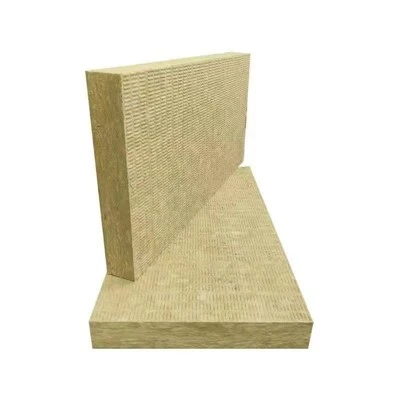
To learn more about our Fireproof Board Series efficiency, request a full set of independent test reports, or discuss pricing and lead times for your project, please reach out to our team. We can schedule a free consultation to walk through your project requirements and explain exactly how our boards can help protect what matters most.
Waterproof Backer Board Series References:
ASTM E119, Standard Test Methods for Fire Tests of Building Construction and Materials, ASTM International, 2021.
NFPA 221, Standard for Fire Walls, Fire Barriers, and Fire Partitions, National Fire Protection Association, 2022.
U.S. Fire Administration, Fire Loss in the United States, 2023.
International Building Code (IBC) Chapter 7, Fire and Smoke Protection Features, International Code Council, 2024.
Langfang Aolesi Thermal Insulation Materials Co., Ltd.
As one of the most professional fireproof board manufacturers and suppliers in China, we also support customized service. Please feel free to buy bulk high quality fireproof board made in China here from our factory. For pricelist, contact us now.
Address: Dongwang Village, Dacheng County, Langfang City, Hebei Province
E-mail: Lfaolesibaowen@outlook.com
WebSite: https://www.lfaolesi.com/
