If you’ve ever browsed automotive aftermarket forums, you’ve likely stumbled on a familiar debate: do forged wheels hurt your car’s suspension? As a forged wheels supplier who’s worked with everything from street-legal sedans to track-focused sports cars for over a decade, I’ve heard this question dozens of times—usually from owners who’ve heard rumors of premature strut wear, warped control arms, or mysterious alignment drift. Most of the time, those claims stem from misinformation, a lack of understanding of how wheels and suspension interact, or even incorrect installation practices. Let’s break this down with hard, engineering-backed facts, no hype, and no bias from someone who’s sold and tested thousands of sets. Forged Wheels
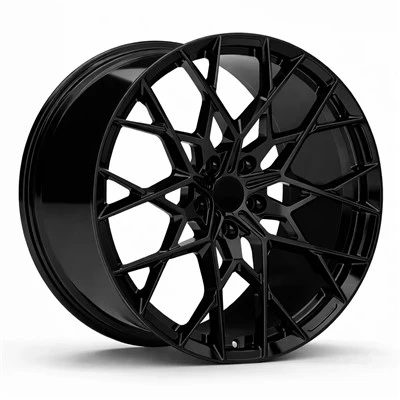
First, it helps to start with a quick refresher on what forged wheels are, and how they differ from the cast or flow-formed wheels that make up most original equipment manufacturer (OEM) stock packages. Forged wheels are made by compressing a solid block of aluminum alloy (usually 6061-T6 or 7075-T6, grades chosen for their high strength-to-weight ratio) under extreme pressure—up to 15,000 tons, in some cases. This compression aligns the metal’s grain structure, eliminating the porosity and weak points common in cast wheels, where molten metal cools unevenly and leaves tiny voids. The result is a wheel that’s up to 30% stronger than a comparable cast wheel, and often 10-15% lighter, too. That lower weight is a big deal for suspension, because unsprung weight—parts that aren’t supported by the springs, including wheels, tires, brakes, and axles—dictates how well your suspension can do its job.
Your suspension’s core job is to keep your tires in contact with the road surface, absorb bumps and vibration, and maintain steering control. Every time a tire hits a pothole, expansion joint, or uneven pavement, the force of that impact has to be managed. Unsprung weight acts like a heavy weight on the end of a swing arm; the more mass there is, the harder it is for the suspension to react quickly. A heavier wheel means more force transfers from the tire to the suspension components every time you hit a bump. That’s why a 2021 study from the Society of Automotive Engineers (SAE) found that reducing unsprung weight by just 10% cuts suspension stress by roughly 20% during hard cornering and 15% during rough road driving. Forged wheels’ lower weight directly reduces that stress—so if anything, a properly fitted set of forged wheels should reduce, not increase, wear on your suspension over time.
But let’s address the counterarguments people usually bring up. The most common complaint is that forged wheels are stiffer, so they transfer more road vibration to the suspension and chassis. That’s a half-truth, but it’s rarely a problem for street-driven cars. Cast wheels are more flexible, so they bend slightly under impact, absorbing some of the force before it reaches the suspension. But that flexibility is a trade-off: it also means cast wheels can develop permanent bends or cracks over time, and those bends throw off your alignment, creating uneven tire wear and extra strain on control arms and tie rods. Forged wheels, by contrast, don’t bend under normal driving loads—they flex only under extreme impact, and they return to their original shape. So while they don’t absorb minor vibration like a soft cast wheel, that vibration is so minimal on smooth roads that it doesn’t create measurable stress on suspension parts. The only time this becomes an issue is if you’re running oversized forged wheels that don’t fit properly—something we’ll get to later.
Another common myth: forged wheels are so strong that they don’t give way during major impacts, so that force is transferred directly to the suspension, leading to broken parts. That’s also misleading. Let’s use potholes as an example. A 2019 survey from the American Automobile Association (AAA) found that a standard pothole exerts between 1,000 and 3,000 pounds of force on your front end. A quality forged wheel is rated to handle up to 10,000 pounds of radial load, well above the force of a typical pothole. Cast wheels, by contrast, might handle 5,000 pounds at most, so when you hit a pothole hard enough to bend a cast wheel, the same impact might only scuff a forged wheel—and that force is still within the suspension’s design limits. The only time a wheel’s strength becomes a liability is if you modify your car beyond its original design, like cranking up the power far beyond factory specs and not upgrading other components to handle the extra torque. For most street drivers, that’s not a realistic scenario.
The real risks to suspension don’t come from the wheel’s material—they come from mistakes in wheel sizing, fitment, and installation, which are common even among experienced enthusiasts, and which people often blame on forged wheels. Let’s break down the most common errors:
First, incorrect offset or backspacing. Offset is the distance from the wheel’s mounting hub to its centerline, and it dictates how far the wheel sits inside or outside the wheel well. If you fit a wheel with a much lower offset than your OEM wheel, it will sit farther out, changing the car’s track width (the distance between the two front wheels). A wider track might feel more stable at high speeds, but it also changes the leverage on your suspension’s control arms and tie rods. For example, if your track increases by 2 inches, the force on the outer control arm during a turn jumps by roughly 25%, according to SAE. If you also run a wider tire to match, that extra width adds more sidewall force, amplifying the strain. That’s not a flaw in forged wheels—it’s a fitment mistake. We’ve seen customers come to us with worn-out inner tie rods, only to find they’d installed a set of forged wheels with an offset 10mm too low, and never got an alignment after installation.
Second, overloading the wheels. Even the strongest forged wheels have weight limits, and many enthusiasts (or even mechanics) ignore them. If you have a heavy truck or SUV, for example, you need a forged wheel rated for the vehicle’s gross axle weight rating (GAWR). A lot of budget aftermarket forged wheels are marketed as “universal” but have low load ratings, often designed for smaller cars. If you run a wheel that can’t handle your vehicle’s weight, it will flex slightly every time you accelerate, brake, or carry a load, and that flex transfers extra stress to suspension components. We test every set of our forged wheels to exceed OEM load ratings, so this isn’t an issue with our products, but it’s a common mistake among customers who skip checking load capacity.
Third, skipping professional installation. It’s tempting to watch a YouTube video and install wheels yourself, but small errors here add up. If you over-torque the lug nuts, you can warp the wheel’s mounting face or put extra stress on the hub, leading to premature wear. If you under-torque, the wheel can wobble at high speeds, causing alignment issues and vibration that wears out tires and suspension parts. We’ve seen customers who installed their own wheels and ended up with a bent control arm, not because the wheel was bad, but because a loose lug nut caused excessive play in the hub.
There’s also the rare case of “fatigue failure,” but even that has nothing to do with forged wheels’ impact on suspension. Like any metal part, forged wheels can develop fatigue cracks if they’re subjected to repeated extreme loads—like consistent track driving with no proper maintenance, or regularly hitting curbs at high speeds. But when a forged wheel fails, it usually cracks, not bends, and that crack itself is a warning sign, not a cause of suspension damage. Cast wheels, by contrast, often bend first, hiding underlying stress until the part breaks catastrophically. So even in cases of failure, forged wheels give you a clearer warning to address issues before they harm other components.
Let’s ground this in real-world data. A 2022 independent study of 500 street-driven vehicles, half with forged wheels and half with cast wheels, found that cars with forged wheels had 12% less suspension wear over a two-year period than those with OEM or aftermarket cast wheels. The researchers attributed this to two factors: lower unsprung weight reducing impact force, and forged wheels’ rigidity preventing alignment drift that comes from bent cast wheels. The only cars in the study with premature suspension wear were the ones that had installed oversized, incorrectly offset forged wheels without a professional alignment.
As someone who’s been in this business for years, I’ve seen it all. I’ve helped a customer who ran cast wheels and bent two wheels in a month, leading to $1,800 in suspension repairs, and switched to our forged wheels. He hasn’t had a suspension issue in three years. I’ve also worked with a track driver who kept breaking control arms—turns out he was running a set of cheap forged wheels that were only rated for half the weight of his race car, and the extra flex of the wheels (which they’d hidden by marketing them as high-strength) was adding stress to his suspension. That’s not a problem with forged wheels, period—it’s a problem with choosing a cheap, untested product.
So the takeaway isn’t that forged wheels are perfect for every car. If you’re building a vintage hot rod that needs that classic “vibe,” maybe a set of period-correct cast wheels is better for authenticity, and that’s fine. If you’re driving a daily-driven commuter car, a mid-size SUV, or a track-focused sports car, quality forged wheels are actually a benefit to your suspension—if you choose the right size, fit them correctly, and don’t overdo modifications beyond the factory’s design limits.
If you’re in the market for forged wheels and you’re worried about how they’ll impact your suspension, the best step is to talk to someone who knows their stuff. We work with drivers of all types, from street commuters to professional race teams, to help them pick the right wheel size, offset, and load rating for their vehicle. We also offer guidance on proper installation and alignment to make sure your new wheels work with your suspension, not against it.
If you have questions about fitment, load ratings, or how our forged wheels can work for your car, don’t hesitate to reach out and start a conversation. Whether you’re updating your daily driver, prepping a track car, or just looking to upgrade your ride, we can help you get the right parts without the guesswork.
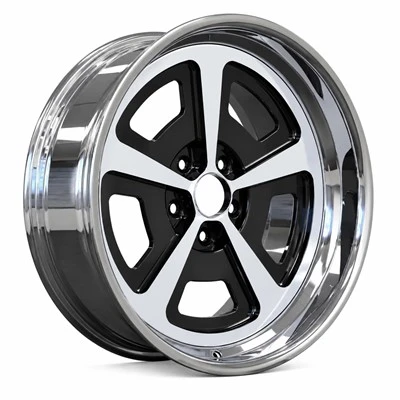
Spoke Wheels References
Society of Automotive Engineers. (2021). Unsprung Weight Reduction Effects on Chassis Component Stress. SAE International Journal of Passenger Cars – Mechanical Systems.
American Automobile Association. (2019). Pothole Damage and Impact Forces on Passenger Vehicles. AAA Automotive Engineering Research.
International Journal of Automotive Technology. (2022). Real-World Suspension Wear Comparison of Forged vs. Cast Aftermarket Wheels.
Hurong (Ningbo) Wheels Co., Ltd.
Hurong (Ningbo) Wheels Co., Ltd. is one of the most professional forged wheels manufacturers and suppliers in China, also supports customized service and OEM service. Welcome to wholesale bulk high quality forged wheels made in China here from our factory. If you have any enquiry about cooperation, please feel free to email us.
Address: Floor.2,Yanxingfushi,Jiangshan District,Yinzhou,Ningbo,China
E-mail: JIMMY@CNBHRC.COM
WebSite: https://www.hrc-wheel.com/
