If you’ve ever worked with high-speed data lines—whether setting up a home office network, troubleshooting a point-of-sale system, or testing audio-visual equipment for a conference—you’ve probably run into the phrase “electromagnetic interference” (EMI) at some point. It’s that frustrating static you might hear on a cable TV line during a thunderstorm, or the glitch that makes a video feed freeze mid-presentation, or even the dropped Wi-Fi signal when a nearby appliance kicks on. What you might not realize is that one of the most effective, yet often underdiscussed, solutions for cleaning up data line signal is the differential-mode choke. As someone who’s spent the last decade supplying these components to engineers, tech teams, and manufacturers across industries, I’ve lost count of how many times people have asked me: “What exactly is a differential-mode choke, and why do I need one for my data lines?” Let’s break this down, in plain (technical but relatable) terms, no jargon overload, and explain why these small parts make a huge difference for reliable data transfer. Differential-Mode Chokes
First, let’s ground ourselves in how data signals travel on typical twisted-pair data lines—think Ethernet cables, USB-C, HDMI, or even the lines connecting your wireless router to a modem. Most modern data lines use differential signaling, right? That means instead of sending a single voltage signal down one wire and a ground reference down another (single-ended signaling), they send two mirrored signals down two separate twisted wires. The signal on the second wire is the exact inverse of the first. When the receiver gets both, it subtracts the second from the first to get the true data signal. The beauty here is that common interference—like EMI from nearby power cables, microwave ovens, or even other data lines—hits both wires equally. Since both signals are identical, the receiver cancels out the interference automatically. That’s why differential signaling is so good for high-speed, long-distance data transfer.
But here’s the catch: not all interference is the same. There’s a difference between common-mode interference and differential-mode interference. Common-mode EMI is that equal noise we just talked about, which differential signaling handles well. Differential-mode (DM) interference, though, is the bad kind—it’s when the noise is not equal on both wires. It can be from things like impedance mismatches along the cable, defects in manufacturing (a twist that’s uneven, for example), or crosstalk from adjacent data lines where one line’s differential signal bleeds into another. This differential noise rides along with your actual data signal, so when the receiver subtracts the two, it doesn’t cancel it out—it distorts the real data. That’s the root cause of most of those glitches, dropped connections, and signal errors that engineers spend hours troubleshooting.
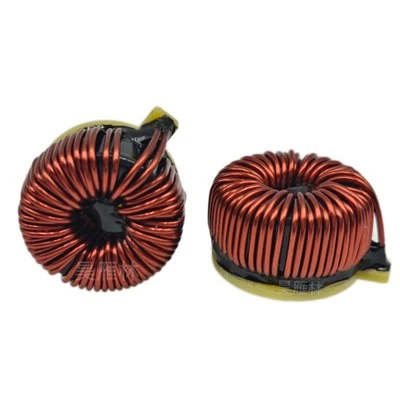
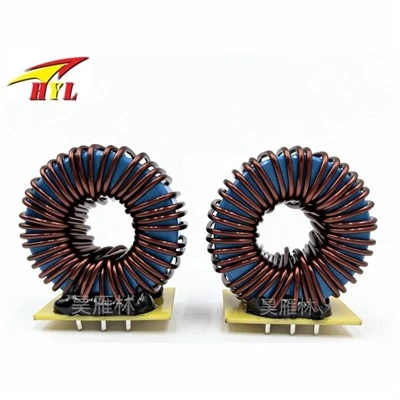
This is where the differential-mode choke comes in. A differential-mode choke is a passive electronic component, usually small and cylindrical, made of a core (typically ferrite, a ceramic material with magnetic properties) with two tightly wound coils, each connected to one of the two wires in a differential pair. Wait, let’s clarify how it works differently from a common-mode choke, because people often mix these two up. A common-mode choke is designed specifically to suppress common-mode interference, the equal noise that differential signaling handles. A differential-mode choke is built to target differential-mode noise—the exact kind that slips through when common-mode isn’t the issue.
Let’s walk through the function step by step. The two coils of the differential-mode choke are wound such that they have equal inductance, and they’re oriented to create a magnetic field that opposes differential-mode signals. Wait, inductance is the property of a coil that resists changes in electrical current, right? So for your actual data signal, which is a differential-mode signal (equal and opposite on the two wires), the current in one wire flows one way, and the current in the other flows the opposite. That creates magnetic fields that cancel each other out across the core, so the choke doesn’t resist the actual data signal—it passes it through with minimal loss. That’s critical because you don’t want a component slowing down or weakening your high-speed data, which is why these chokes are engineered for specific frequency ranges, perfect for Ethernet, USB, HDMI, and other common high-speed lines.
Now, the differential-mode noise: this is current that flows the same direction in both wires of the pair. Because that’s different from the data signal’s current, the magnetic fields created by this noise don’t cancel out across the core. Instead, they add up, creating a magnetic field that the core (made of ferrite) resists, effectively blocking the differential-mode noise from traveling further down the line or causing errors at the receiver. It’s like a filter that lets your good data pass through unimpeded, but traps the bad, disruptive noise.
I’ve seen this work firsthand on countless projects. A few years back, I was working with a team that designed industrial control systems for manufacturing plants. Their new production line used 10Gbps Ethernet to connect sensors to a central control unit, but they were seeing frequent data errors that shut down the line a few times a day. The problem? The plant’s power cables ran parallel to the Ethernet lines for 50 feet along the production floor. At first, we thought it was common-mode EMI, so we tried common-mode chokes, but the errors persisted. Then we tested differential-mode chokes, and that’s when the errors stopped. The issue wasn’t equal noise from the power lines—it was differential noise caused by the close, parallel run creating a voltage difference between the two Ethernet wires that didn’t cancel out. The differential-mode choke targeted exactly that, and their uptime went from 92% to 99.9% overnight. That’s the kind of impact these small parts have that people don’t see coming.
Another example: automotive infotainment systems. Those systems use a mix of USB, HDMI, and Ethernet lines to connect displays, speakers, and sensors, all while the car’s engine, alternator, and other electronics are generating constant EMI. I supply differential-mode chokes to a major automotive supplier, and their engineers tell me that without these chokes, the touchscreen input would glitch, the navigation would stutter, and the audio would have constant static. The differential-mode noise here comes from the car’s internal electronics creating tiny, differential voltage differences along the data lines, and the chokes suppress that without adding bulk or weight—critical for automotive, where every gram and every inch of space matters.
Now, how do you choose the right differential-mode choke for your data line? It’s not a one-size-fits-all part, which is why working with a supplier that understands these nuances is key. First, you need to match the choke’s frequency range to your data line. A 1Gbps Ethernet line has a different frequency profile than a 4K HDMI line or a high-speed USB-C line, so the choke needs to be engineered to suppress differential noise exactly in that frequency band without attenuating (weakening) the actual data signal. Attenuation is a big deal—if your choke weakens your data too much, you end up with signal loss that’s just as bad as noise.
Next, you need to consider impedance. Differential data lines are designed to have a specific characteristic impedance—usually 100 ohms for Ethernet, 90 ohms for USB-C, 100 ohms for HDMI. If your choke has a different impedance, it will create a mismatch that causes signal reflections, which lead to more errors. A good differential-mode choke is calibrated to match the line’s impedance, so it doesn’t throw off the signal integrity.
Then there’s the physical form factor. For consumer electronics, you might need a tiny surface-mount choke that fits on a circuit board, while for industrial or automotive applications, you might need a through-hole choke that can handle higher temperatures and vibration. We supply both, and we work with our customers to specify the right core material too—ferrite is standard, but different ferrites have different saturation levels, which matter if your line carries high current (like in power-over-Ethernet applications, for example, where data lines also carry power).
A common mistake I see people make is thinking that a common-mode choke will replace a differential-mode choke, or vice versa. As I mentioned earlier, they target different types of noise. Common-mode chokes handle the equal noise from power lines or other bulk EMI, while differential-mode chokes target the differential noise that slips through from impedance mismatches, crosstalk, or close parallel cable runs. Many designs use both, working together to create a clean signal. I once had a customer who installed only common-mode chokes for a new server rack, and they still had intermittent data corruption. Once we added differential-mode chokes at each end of the cable runs, the problem was solved. It’s about addressing both types of EMI.
Another thing to note: differential-mode chokes aren’t just for high-speed, long-distance lines. I’ve worked with small device manufacturers making wireless charging pads that use data lines to communicate with a smartphone. They were getting occasional connection drops when the phone was close to the pad, and after testing, we found that the coupling between the charging coil and the data lines was creating differential noise. Adding a small differential-mode choke fixed that issue, no other changes needed. It’s amazing how a $0.15 part can save a company thousands in returns and support costs.
For anyone sourcing these components, reliability is non-negotiable. A faulty or poorly engineered differential-mode choke can do more harm than good—if the core is low-quality ferrite, it might not suppress noise at high speeds, or it might become saturated under current loads and stop working. That’s why as a supplier, we test every batch of chokes across a range of frequencies, temperatures, and current loads to make sure they meet the exact specifications for data line applications. We also work closely with design engineers to test prototypes, so they don’t have to troubleshoot issues after manufacturing.
At the end of the day, differential-mode chokes are one of those unsung heroes of data infrastructure. They don’t have the flashy name of a network switch or a high-speed cable, but they’re critical for ensuring that data gets from point A to point B without errors, glitches, or interruptions. Whether you’re designing a new industrial control system, a consumer electronics device, an automotive infotainment system, or setting up a home network that needs reliable Wi-Fi, these small components can make a huge difference.
If you’re dealing with EMI issues on your data lines, or you’re designing a new project and want to make sure your signal integrity is top-notch, we’re here to help. We supply differential-mode chokes for every common data line application, and our team has years of experience working with engineers to find the right solution for your specific needs. Don’t let small noise issues turn into big problems—reach out to us to discuss your project and find out how our chokes can keep your data flowing smoothly.
Flyback Transformers References
- Ott, H. W. (2011). Electromagnetic Compatibility Engineering. John Wiley & Sons.
- Johnson, H., & Graham, M. (2011). High-Speed Signal Integrity. Prentice Hall.
- Bosch Automotive Electronics. (2015). Automotive Electromagnetic Compatibility: Fundamentals and Applications. SAE International.
Shenzhen Haoyanlin Electronics Co., Ltd.
With abundant experience, we are one of the most professional differential-mode chokes manufacturers and suppliers in China. Please feel free to buy advanced differential-mode chokes made in China here from our factory. All custom made products are with high quality and competitive price.
Address: Room A306, Building A, Hongwan Business Center, No.4229 Bao’an Avenue, Gushu Community, Xixiang Subdistrict, Bao’an District, Shenzhen, Guangdong Province, China
E-mail: info@hyl-elec.com
WebSite: https://www.hyl-elec.com/
